This week begins the last week before the end of Ramadan, which culminates in a holiday and celebration called Eid al-Fitr. It feels as if, collectively, the world around us has just endured a grueling effort for 30 days of selective fasting during daylight hours, and is now approaching a celebratory breaking of the strain of those four weeks. I say “it feels as if,” because I imagine this to in fact be the reality of the experience that many around me are feeling. And though I myself have not fasted food and drink from dawn until sunset during an entire lunar month, I’m certain at least over half of the people around me have, and well over ¾ of the population are in some way participating in that effort.
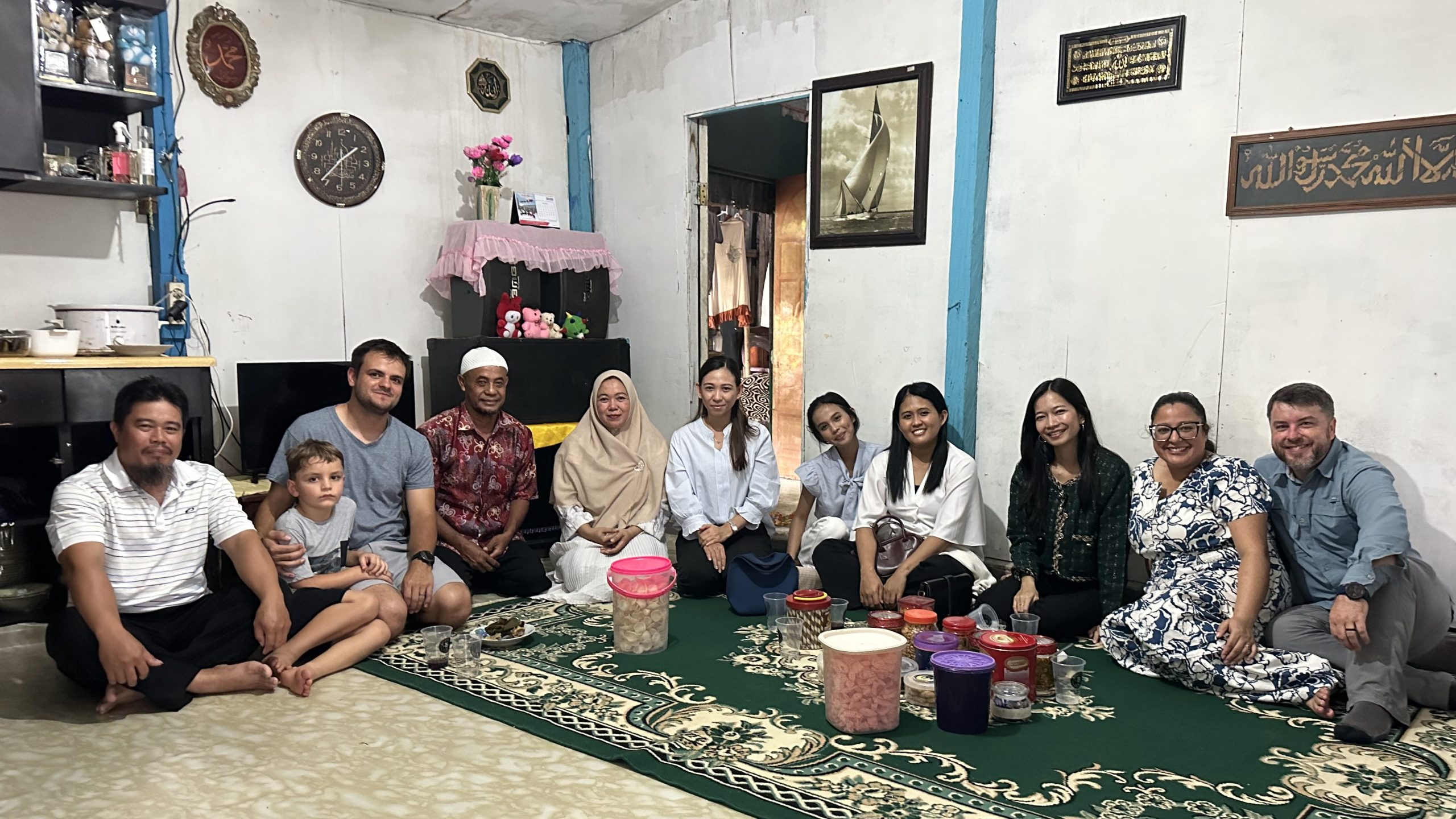
So I think it’s interesting, for me as an outsider, to experience a little bit what it’s like being introduced to this practice that (85%) of the country I live in is familiar with and probably some quarter of the world understands. This year, Ramadan was celebrated from February 18 until March 19. The mechanics of the practice is not complicated: Ramadan is a full lunar month on the Islamic calendar during which practicing Muslims don’t eat, drink, have sex, or smoke from dawn until dusk. But what does it actually look like in practice here in our medium-sized marginal city of Tarakan, Indonesia?
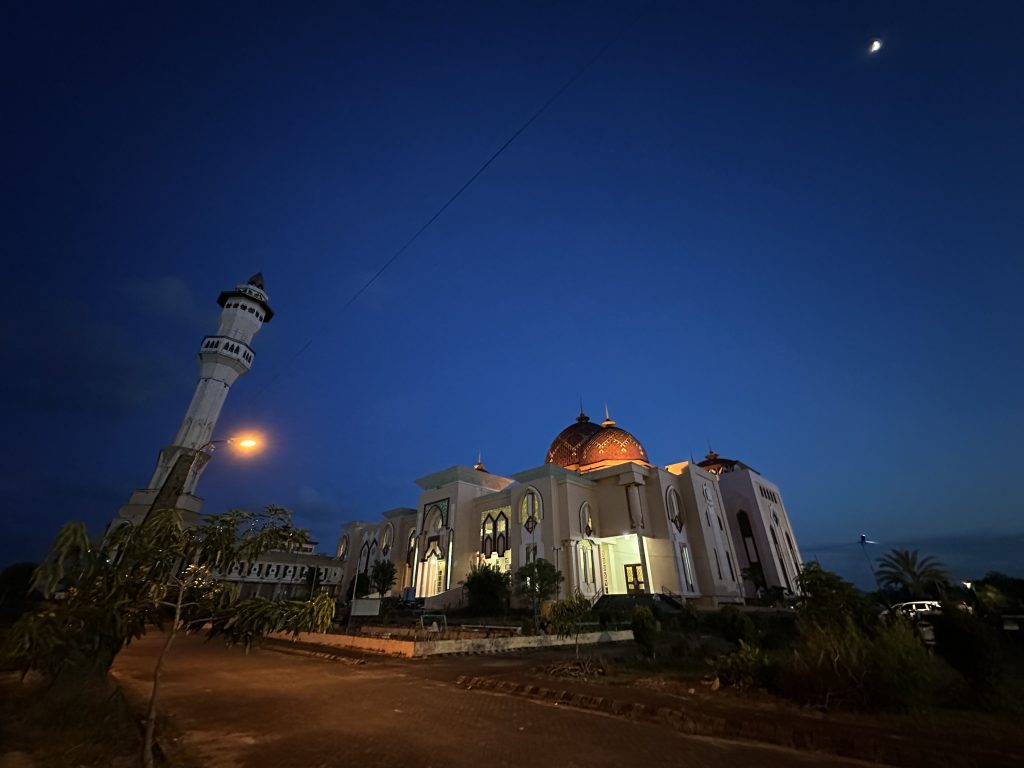
First, the strain of the fast… Every morning at 3am, a nearby mosque blares an announcement from its ring of bullhorns at the top of its minaret. “Suhoor suhoor suhoor suhoor!” is repeated several times. There is a pause. And then again, the announcement broadcast in the dead of morning: “suhoor suhoor suhoor suhoor!” Suhoor is the pre-dawn meal that is eaten not just before dawn, but also before the fajr morning prayer, which, currently in my location, is 5:01am. So people are getting up to eat their pre-dawn meal before they go to their first prayers at dawn. I have no idea what this looks like, because I haven’t gotten up at that time to go explore. I don’t know if it’s eaten together at a mosque, or in homes. A series of important rituals occur sometime between 3 and 5am, and on a good night I’m able to sleep straight through them. From some mosques, music and sermons blare throughout the pre-dawn hours. Until the dawn fajr calls to prayer are blared from the dozen or so mosques surrounding our neighborhood at around 5am, and at that point, I’m awake and not going back to sleep. More on the calls to prayer later, because those are not a Ramadan thing… those are broadcast every day, five times a day, every day of the year. It’s just that during Ramadan there is a pre-call to prayer for the early morning Suhoor meal. Some nights there are chants broadcast as early (late?) as 1:50am, but that seems to be one weird mosque near us, I don’t think that’s normal.
Throughout the day things continue pretty much as normal, except some businesses are closed, odd ingredients are harder to find in the market and some are more expensive, and some restaurants are coyly hiding the fact that they are open, perhaps trying not to announce or tempt passersby into breaking their fast. Some restaurants are closed at different hours (during the day) to accommodate the fasting. The music/announcements/prayers/sermons are broadcast for longer periods of time than the normal calls to prayer, often jangling in the soundscape for hours on end.
As the workday ends and dusk approaches, everything ramps up again for the time when the fast is broken (iftar), which is also the time for the evening maghrib prayer, the fourth prayer in the series of five daily prayers. Also, of course, at the time of sunset. It’s during these late afternoon hours that I learned about a few fascinating terms linked to customs people celebrate in the later hours of the day on Ramadan. The terms are takjil (sweets and snacks sold from booths for a quick breaking of your fast) and bukber (the communal breaking of your fast with friends and companions).
During Ramadan, hundreds of booths have popped up, clustered in various sections of the city, like pop-up food truck pods. They sell all sorts of treats, called takjil – fried things, sweets, drinks, “comfort foods” that no westerner would recognize as “comfort foods”… like kolak, satey, types of spring rolls, sweet cakes… it’s all delicious, and perfect for a quick break in your fast if you haven’t been near food all day. That’s one option, for the breaking of your fast, and it’s a very tantalizing option for a body that’s been abstaining from food and drink all day – the mouthwatering smells and the collective throb of the takjil clusters is unmatched.
Except, possibly, by the chance to buka puasa bersama (bukber), literally, to “open together” or “break your fast communally”. For this option, you’d better book a seat at a restaurant in advance. If you arrive anywhere near the iftar hour (6:24pm currently), you’ll likely get turned away, and if you are granted a seat, it could be over an hour until you eat. Because all reservations, table, and food have been carefully prepared ahead of time for bukber, communal breaking of fast together with friends and family. It’s hard to overstate how packed and to overflowing the restaurants are at this hour, and how clumped up the streets are full of people buying takjil at the booths. Places are filled UP! This communal breaking of the fast in Islamic cultures is recognized by UNESCO as an “intangible cultural heritage” practice.
And this week, the week before Eid al-Fitr, all of the above practices ramp up to the extreme. Blaring broadcasts from the minarets are longer, louder, and more frequent. Restaurants are popping at the seams. The takjil booths are swarming energetically with activity. Eid al-Fitr (Idul Fitri here) itself is a national holiday so everyone has it off. For this religious holiday, it is Muslims invite their friends and neighbors (regardless of religion) into their homes to eat and celebrate. (On Christmas, Christians invite their neighbors and friends to “open house” as well, regardless of religion).
What stands out to me most of all from this practice is, really, how different and unrelatable it is to anything I have ever experienced in the United States.
I strive to find an equivalent in my U.S. experience to compare this to, a period of a full month when publicly, collectively, over half of the population voluntarily abstains from a perfectly legitimate satisfaction, when as a large group we choose to deny ourselves the cravings of daily sustenance, in order for… well, for anything, really. Not in my religious or public experience, nor in any that I am aware of in my parents or grandparents’ generation, has some sort of collective effort like this been practiced… even in religious settings. I have heard, on occasion, that this is practiced among some African American churches where a congregation will commit collectively to praying and fasting for a period of several weeks (for Lent or for a period of discernment), but again, this is not my experience. And it is not an experience of the greater public at large in the United States. Nor is Lent, which is the closest practice I am familiar with, and interestingly, overlaps with Ramadan this year. In my experience, Lent is practiced individually, for Christians here in Indonesia as well. Our church here explains and practices it, but the examples given are for each individual to choose something like chocolate, social media, coffee to abstain from for the 40 days of Lent from Ash Wednesday until Easter. This is my experience in the U.S. also, and it’s different because it’s so individualistic.
Do we, as western Christians, have good reason to have rejected and turned away from pretty much every collective, ritualistic practice I can think of that involves self-imposing limitations on ourselves, that involves abstinence, renunciation and self-restraint? Is my intrigue and fascination with this a result of how starved I am for this sort of experience in my life, or is it because of the alure of something different and exotic? Would I really feel as admirable toward it or indifferent about it if I were coerced into doing it every year? If I were actually an unwilling participant rather than an outsider looking in on the practice? Hard to say.
But is there something to learn from observing this practice and seriously considering it? I think so. Fasting and prayer are important, and I wish I had a collective group with which to practice it voluntarily, even if it were ritualistic but especially in times when I sought deeper guidance or wisdom or connection. It’s too heavy a lift to ask or expect this of others. But if it were just a ritualistic part of my year, I think I would strive to approach it with gratitude and appreciation. I think I’m weird in that though. Who is grateful or gets excited about renunciation and self-restraint?